
Why is my AC running but not cooling?
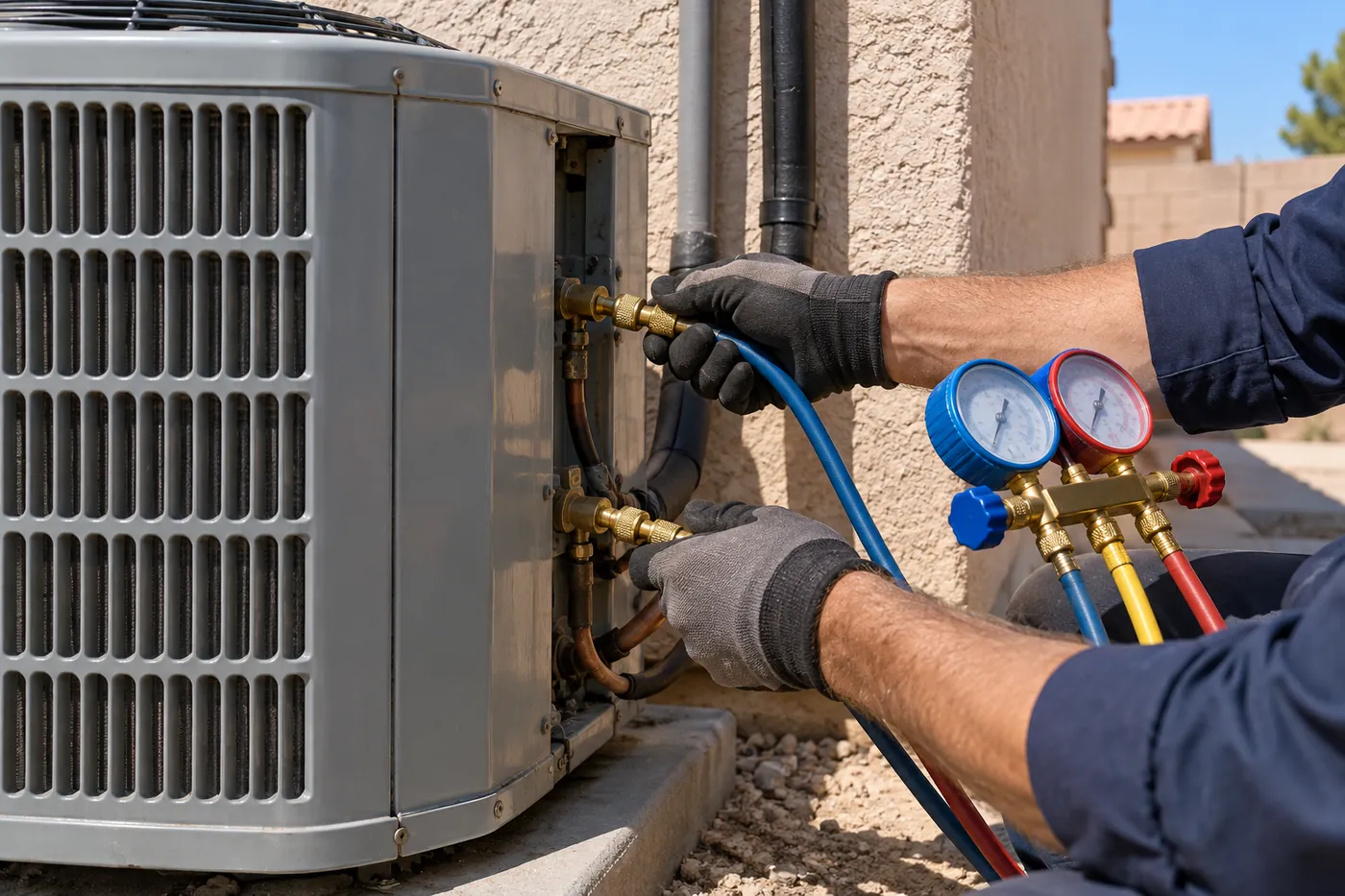
An air conditioner can run without cooling when airflow is restricted, the outdoor coil is packed with dust, or the compressor cannot start. A dirty filter is the safest first check. If the outdoor unit hums, trips a breaker, or blows warm air, stop repeated resets and arrange a service inspection.
Start with the thermostat set to cooling and a temperature below the room temperature. Check whether the indoor blower is moving air and whether the outdoor fan is turning. Weak airflow points toward a filter, blower motor, duct, or frozen coil problem, while normal airflow with warm air points farther into the system.
Fresno heat and dust can load a filter and coat the condenser coil. When the coil cannot release heat, the system may run for long periods and still leave the house warm. Keep leaves, stored items, and other debris away from the outdoor unit, but do not bend the coil fins or spray electrical parts.
A failed capacitor can keep the condenser fan or compressor from starting correctly. You may hear a hum, see the fan stop, or notice the breaker trip. Capacitors hold electrical charge, so testing or replacing one is technician work, even after the disconnect is switched off.
What can I check safely before calling for AC help?
You can check the thermostat setting, replace a dirty filter, confirm that supply vents are open, and look for obvious debris around the outdoor unit. You can also check whether the electrical panel breaker has tripped once. Do not open panels, handle capacitors, add refrigerant, or work on wiring.
A clogged filter is one of the easiest causes to correct. Turn the system off, remove the filter, and compare it with a clean replacement of the same size and type. A filter that is gray, packed with dust, or difficult to see through can reduce airflow enough to cause poor cooling or icing.
Walk through the rooms and confirm that supply vents and return grilles are not blocked by furniture or rugs. Listen for rattling, grinding, or a blower that starts and stops. Write down the room temperature, thermostat setting, and whether the system runs continuously, because those details help with diagnosis.
Look at the outdoor unit from a safe distance. Remove loose leaves or trash nearby, but do not take off the grille or reach inside. If a breaker has tripped, reset it only once after turning the thermostat off. If it trips again, leave it off and call for electrical or AC service.
Why does an air conditioner freeze up?
An AC may freeze when low airflow or low refrigerant makes the evaporator coil too cold. A dirty filter, blocked return, weak blower motor, closed vents, or refrigerant leak can all contribute. Turn the system off and let the ice thaw before service, but do not chip ice from the coil.
Ice on the copper refrigerant line, evaporator coil, or indoor cabinet is a clear sign that the system is not operating normally. The air coming from the vents may feel weak, or water may appear near the furnace after the ice melts. Continued operation can stress the compressor and leave more water around the equipment.
The first safe step is to switch cooling off and set the thermostat fan to off. Check the filter after the coil has thawed, but do not remove panels to reach the coil. If the filter is clean and the system freezes again, the cause may involve the blower motor, duct restriction, coil, or refrigerant charge.
Refrigerant does not get used up during normal operation. Low refrigerant usually means there is a leak somewhere in the system. Finding and repairing the leak, then checking the charge, requires tools and training. Adding refrigerant without finding the leak may only provide temporary cooling.
Can a bad part or duct leak stop cooling?
Yes. A failed capacitor, contactor, compressor, blower motor, or control can stop part of the cooling cycle. Leaky ducts can also send cooled air into an attic or wall space, while an undersized system may struggle during extreme heat. Testing must identify the failed part before repair.
The capacitor helps motors start and run, while the contactor sends power to the outdoor equipment. A weak capacitor may cause hard starting, loud humming, or intermittent cooling. A failed contactor can leave the outdoor unit silent even though the indoor blower is running.
The compressor moves refrigerant through the system, so a compressor problem can create warm air, unusual noise, or repeated shutdowns. The indoor blower motor affects airflow across the evaporator coil. These components involve electrical testing and stored energy, so they should not be opened or tested by a homeowner.
Duct leaks can make one room hot while another room feels cooler. Crushed flex duct, loose connections, and poor insulation can waste conditioned air before it reaches the vents. An undersized system may run for hours in severe heat, especially if the home has added rooms or major air leakage.
When should a Fresno homeowner call for AC service?
Call for AC service when the system blows warm air, freezes repeatedly, trips a breaker, leaks water, makes unusual electrical sounds, or cannot cool the home during normal operation. A technician can separate airflow, electrical, refrigerant, duct, and sizing problems. ProLine Services provides a free estimate before any work starts.
Service is also wise when one room stays hot, the system runs without reaching the thermostat setting, or cooling changes from day to day. Keep notes about the symptom, filter condition, outdoor fan, breaker activity, and any ice or water. These details can shorten the time spent tracing the fault.
Repair cost depends on the failed part, access, refrigerant leak location, duct condition, equipment size, and whether the system needs repair or replacement. Extreme heat can reveal a system that is too small for the load, but a dirty coil or weak capacitor may create similar symptoms. Testing comes before choosing the repair.
ProLine Services serves homes and businesses in Fresno and nearby Central Valley communities. Our process is Consultation, Estimate, Scheduling, Installation or repair, and Final walkthrough. Call (559) 201-0101 for service, including the emergency line that is open 24/7.
What AC symptoms point to each common cause?
| Symptom | Likely cause | Who fixes it |
|---|---|---|
| Weak airflow from several vents | Dirty filter, blocked return, frozen evaporator coil, or blower motor problem | Homeowner can replace the filter; a technician checks the coil, blower, and ductwork |
| Outdoor unit hums but fan does not start | Failed capacitor, contactor, motor, or electrical fault | HVAC or electrical technician |
| Ice on the refrigerant line or indoor coil | Low airflow or low refrigerant from a leak | HVAC technician after the system thaws |
| System runs for hours in extreme heat | Dirty condenser coil, undersized system, duct leakage, or weak component | HVAC technician, with duct or electrical help when needed |
| One room stays hot while others cool | Leaky or blocked duct, poor airflow balance, or room load problem | HVAC technician with duct inspection |
| Breaker trips when cooling starts | Electrical fault, failed capacitor, contactor, compressor, or motor | Licensed electrical or HVAC technician |
Questions people ask
Can a dirty condenser coil make an AC stop cooling?
Yes. Dust and debris on the outdoor condenser coil can slow heat transfer, especially during Fresno heat. The system may run longer, blow warmer air, or trip a safety control. Keep the area around the unit clear, but do not remove panels or spray water into electrical sections. A technician can inspect and clean the coil safely.
Why does my AC freeze after I install a new filter?
A new filter may not solve the cause if the evaporator coil is already dirty, the blower motor is weak, a return duct is blocked, or refrigerant is leaking. Turn cooling off and let the ice melt. If freezing returns with a clean filter, stop running the system and arrange an inspection.
How do I know if my AC has a refrigerant leak?
Common clues include ice on the refrigerant line, weak cooling, long run times, hissing sounds, or a system that cools less than it did before. These signs can have other causes, so they do not prove a leak. Refrigerant testing and leak repair require HVAC tools and should not be done by a homeowner.
Why is one Fresno room hotter than the rest of the house?
A hot room may have a leaking, crushed, or disconnected duct, a blocked supply vent, poor insulation, or a high window load. An undersized system can add to the problem during extreme heat. Note the room, time of day, vent airflow, and thermostat reading so a technician can compare the symptom with the duct layout.