
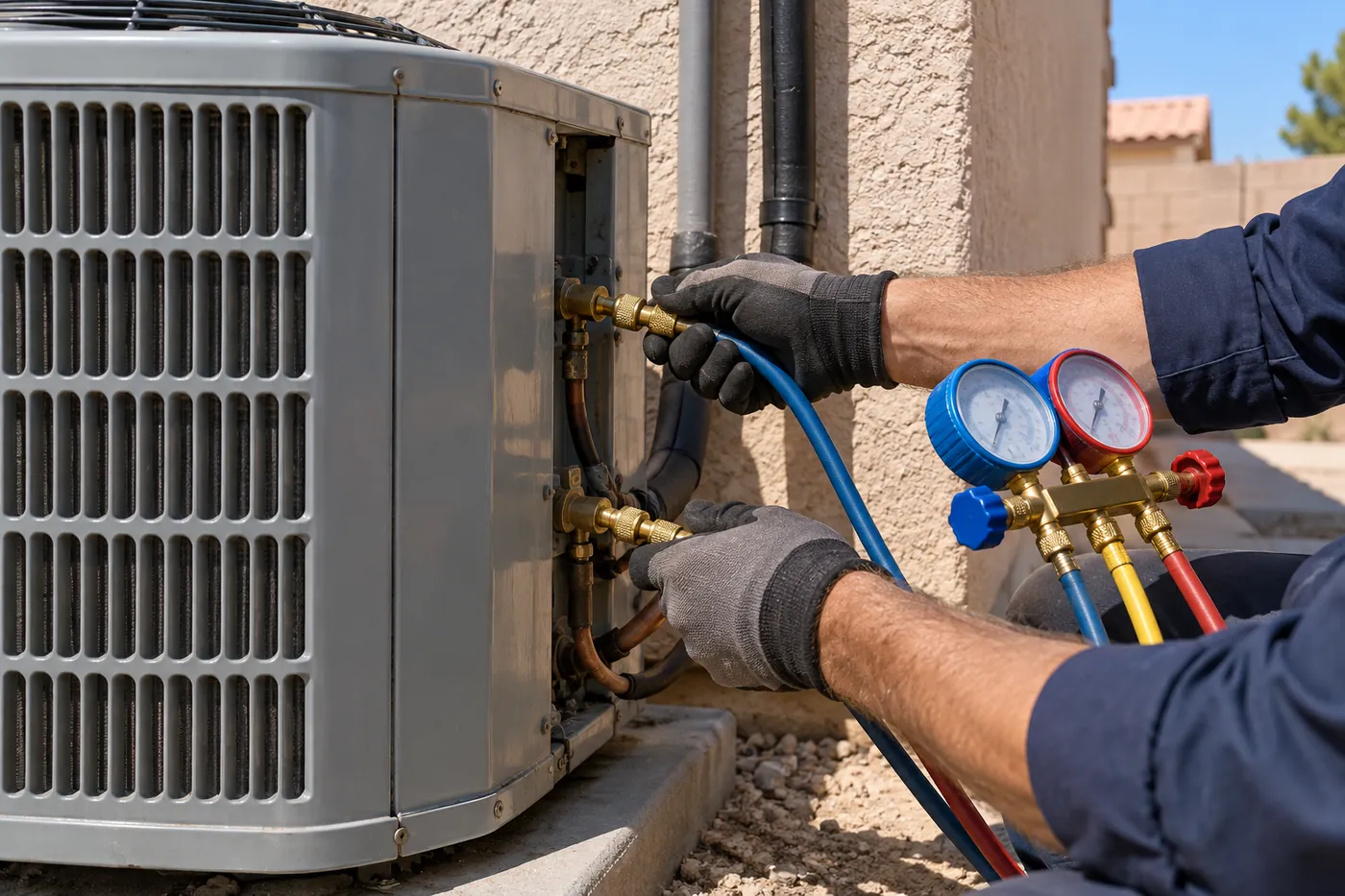
How old is too old for an air conditioner?
Age is only one part of the decision. A newer unit with a failed capacitor, contactor, or blower motor often deserves repair. An older system with repeated breakdowns, uneven rooms, rising power use, or a major compressor or coil failure is worth comparing with replacement. The goal is a reliable choice.
Fresno heat puts long hours on an air conditioner, but age does not tell the whole story. A newer system may need one part, while an older system may still be worth repairing if it has been dependable and cools the rooms evenly.
Look at the service history. Repeated capacitor, contactor, blower motor, or refrigerant repairs can signal that several parts are reaching the end of their useful life, even if each repair alone seems manageable.
Older homes can also have duct leaks, weak insulation, or poor return airflow. Fixing those issues may improve cooling without replacing the outdoor unit, so test the whole system before blaming age.
Does the failed part decide if I should replace my AC?
A failed capacitor, contactor, or control part is usually a smaller repair decision than a damaged compressor. A compressor failure can involve the sealed refrigerant circuit and a large labor job. Coil leaks, a weak blower motor, and repeated electrical faults also deserve a closer look at the system's age and history.
A capacitor helps start or run the compressor or fan motor. A contactor switches power to the outdoor unit. When either part fails, the unit may hum, click, stop suddenly, or blow warm air, and a trained technician can test the electrical circuit.
A compressor is different. It is the main pumping component, and failure can send high electrical readings, loud noises, short cycling, or no cooling through the system. A condenser coil leak or indoor evaporator coil leak can create a separate sealed-system problem.
Do not open the electrical cabinet or touch a live capacitor. Write down the symptom, when it began, and whether the indoor fan still runs. That record helps separate a control problem from a larger repair.
Does R-22 make replacement more likely?
Older R-22 systems can be harder to service because R-22 is no longer produced for new equipment. A leak may require recovery, leak testing, and a refrigerant choice that makes replacement more practical. Newer systems use different refrigerants, so the correct path depends on the equipment label, leak location, age, and repair history.
Find the equipment label before calling. It may list R-22, R-410A, or another refrigerant, along with model and serial information. Do not remove panels to find it, and never add refrigerant yourself.
R-22 is common on older equipment. A leak can mean leak testing, recovery, and a hard choice between repairing the circuit or moving to a newer system. The leak location matters, because a small accessible leak is different from a damaged coil.
Ask if the diagnosis includes the leak source, the failed component, and the condition of the rest of the system. A repair that stops one leak may not solve poor airflow, worn electrical parts, or rooms that never cool.
Which comfort problems point to replacement?
One room that never cools can point to a duct, airflow, thermostat, or insulation problem, not a failed whole system. If the compressor runs often, indoor humidity stays high, or repairs keep returning, compare replacement. A technician should test airflow, temperature split, electrical parts, coils, and refrigerant before making that call.
Warm rooms do not always mean the outdoor unit is finished. A closed damper, crushed flex duct, dirty evaporator coil, weak blower motor, or blocked return can reduce airflow to one area. A thermostat placed near a heat source can also cause uneven cycling.
High indoor humidity is another clue. It can come from short cycles, low airflow, a dirty coil, or a system that is too large for the space. Water around the indoor unit may point to a clogged drain or frozen coil.
Write down which rooms stay warm, how long the system runs, and whether the problem changes with outdoor temperature. Those details help the technician test airflow and controls instead of guessing from the thermostat alone.
How should I compare an AC repair with replacement?
Start with the failed part, the system's age, past repairs, refrigerant type, and the comfort problem you still have. Ask what the repair fixes and what it will not fix. Then compare that with a replacement plan that fits the home's load, ductwork, electrical service, and budget.
Compare the repair scope with the condition of the full system. Ask about the failed part, the cause of failure, other worn components, refrigerant type, duct condition, and electrical service. Cost is driven by those details, not by age alone.
Use a clear process: Consultation, Estimate, Scheduling, Installation or repair, then Final walkthrough. The estimate should state what the repair changes, what replacement includes, and what questions remain about airflow, drainage, or load.
Keep model information and prior invoices if you have them. Do not choose from a part name alone, because a new capacitor will not fix a leaking coil or undersized duct system. A sound comparison leaves you able to make the call without pressure.
Which AC situations usually call for repair or replacement?
| Situation | Usually repair | Worth comparing replacement |
|---|---|---|
| Failed capacitor or contactor | The system is otherwise reliable and cools evenly | The same electrical faults keep returning |
| Dirty filter or blocked return | Restore airflow and check the blower and coil | The system has several other worn parts |
| Small refrigerant leak on newer equipment | The leak is accessible and the system is in good condition | The leak is in a damaged coil or sealed circuit |
| Compressor failure | The equipment is newer and the rest of the system tests well | The unit is older or has repeated repair history |
| R-22 system with a refrigerant leak | The leak is minor and the equipment remains dependable | The coil is damaged or service needs keep increasing |
| One warm room | A duct, damper, return, or thermostat problem is found | Testing finds broader capacity or system problems |
Questions people ask
Can a bad capacitor justify replacing the AC?
Usually no. A capacitor is a replaceable electrical part, so a single failure on an otherwise sound system often points to repair. Replacement becomes worth comparing when the unit is older, has repeated faults, has coil or compressor trouble, or still leaves rooms hot after the part is changed.
How do I know if my system uses R-22?
Read the equipment data plate without removing panels. It may list R-22, R-410A, or another refrigerant, along with model information. Take a clear photo of the label for the technician. Do not add refrigerant, open the sealed circuit, or rely on the age of the unit alone.
Does a compressor failure always mean replacement?
No. A newer system with a healthy coil, good airflow, and limited repair history may still be a repair candidate. On older equipment, compressor failure is more likely to make replacement worth comparing because the repair involves major labor and other components may already be worn.
What should I record before requesting an AC estimate?
Write down the system age if known, model information, rooms that stay warm, recent repairs, unusual sounds, breaker activity, and whether the indoor fan runs. Note if ice or water appears. These details help the technician test the likely cause instead of starting with a broad guess.