
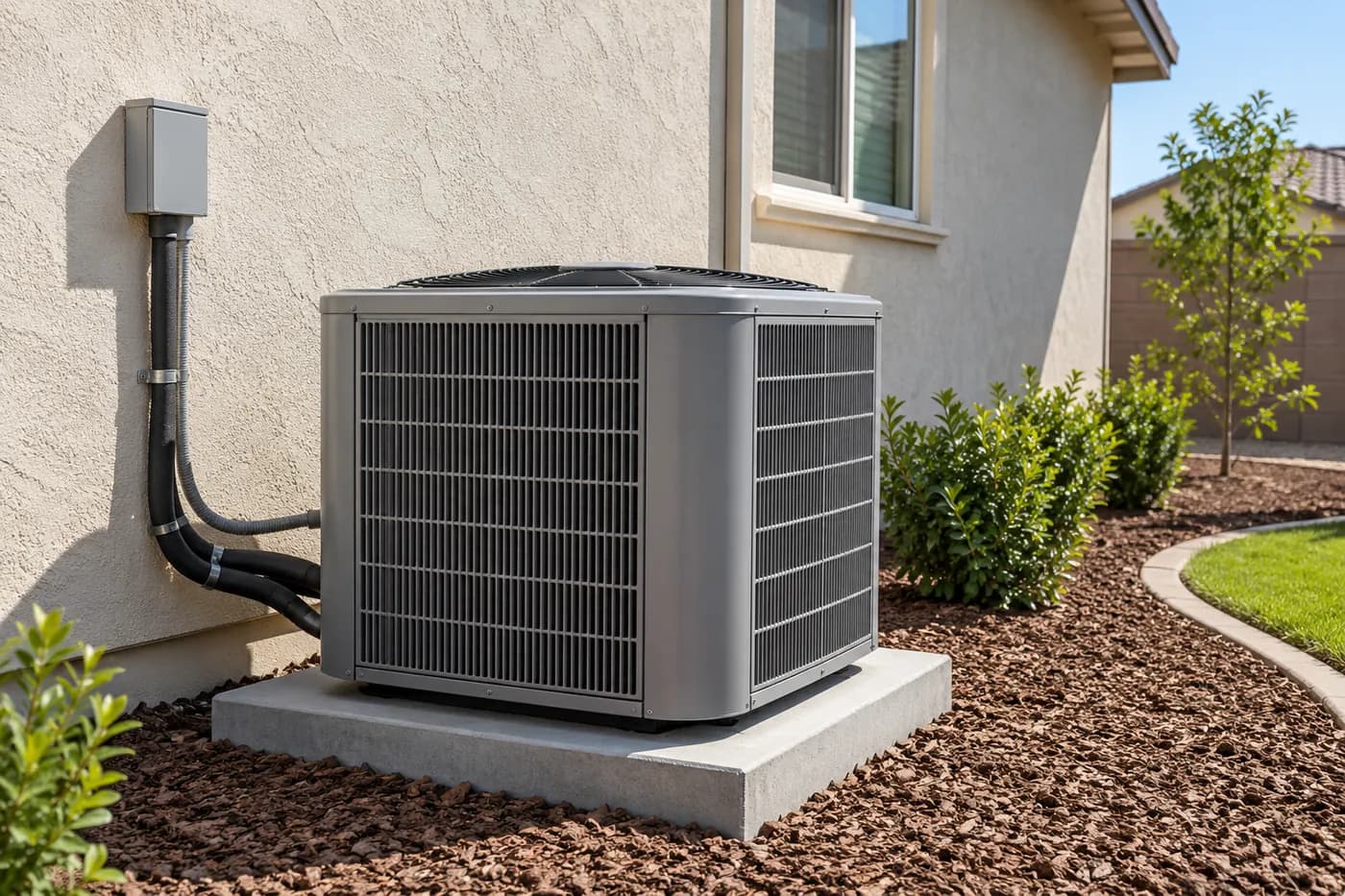
What makes AC installation cost more or less?
The biggest cost drivers are system size, efficiency, duct condition, electrical capacity, and the access needed for the equipment. A correct estimate also accounts for the line set, pad, permit requirements, and removal of the old unit. Ask for each item in writing so two proposals describe the same work.
An AC replacement is more than swapping one box for another. The outdoor condenser, indoor evaporator coil, blower section, refrigerant line, drain, thermostat, and electrical connections all need to work together. A proposal should explain which parts are being replaced and which parts will remain.
Fresno summers put long hours on an air conditioner. That makes correct sizing and airflow important. A system that is too large may turn on and off often, while a system that is too small may run for long periods without reaching the set temperature.
Efficiency also changes the equipment choice and installation scope. A higher efficiency system may require a matched indoor coil, updated controls, or changes to the outdoor pad and line set. The right comparison looks at the complete installed system, not one efficiency label.
How does AC size affect the installation estimate?
A system should be sized from a load calculation, not from the old unit's label or square footage alone. An oversized AC may cycle often and leave rooms damp, while an undersized unit may run for long periods on hot Fresno days. The right size supports steady cooling and airflow.
A load calculation considers the home's size, insulation, windows, orientation, ceiling height, duct layout, and expected heat gain. It helps determine how much cooling the space needs during hot weather. The old equipment size may only show what was installed before, not what the home needs now.
Room additions, new windows, insulation changes, and remodeled spaces can change the calculation. So can duct repairs or a change from an open attic layout to a finished room. Ask the installer to explain the main factors used to select the capacity.
The indoor coil and blower must match the outdoor condenser. If the parts are mismatched, the system may not deliver its rated efficiency or may have poor airflow. Correct sizing also helps reduce short cycling, cold spots, and unnecessary wear on the compressor.
Can old ductwork change AC installation cost?
Old ductwork can change the estimate when it leaks, is crushed, lacks insulation, or cannot deliver enough air to each room. A technician may find loose connections, damaged flex duct, blocked returns, or undersized grilles. Ask for duct findings separately so needed repairs are clear.
Leaky ducts waste cooled air before it reaches the rooms. In a hot attic, damaged insulation can add more heat to the air stream. A visual inspection should include accessible supply runs, return ducts, connections, insulation, and the filter location.
Airflow symptoms can point to duct problems. Rooms that stay warm, whistling registers, weak return airflow, and a filter that loads with dust quickly all deserve attention. These symptoms can also come from a dirty coil, a weak blower motor, or a blocked filter, so testing matters.
A replacement may need only small duct repairs, or it may need larger changes around the air handler. The estimate should identify the sections involved and explain why the work is needed. Do not assume a new condenser will fix airflow that was poor before installation.
What electrical and site work may be needed?
Electrical and site conditions can affect the estimate when the existing circuit, disconnect, pad, refrigerant line, or equipment access does not suit the new system. The work may involve a breaker check, wiring changes, a new pad, line set work, or careful removal of old equipment.
The outdoor unit needs a correctly sized circuit, disconnect, wiring, and grounding path. A technician may inspect the breaker, conductors, disconnect, and service panel before recommending equipment. Never open electrical equipment or change a breaker yourself.
The refrigerant line carries a major part of the system's operation. Its length, size, condition, insulation, and compatibility with the new equipment matter. A damaged or contaminated line set may need replacement rather than being connected to new equipment.
The condenser needs a stable, level pad with room for airflow and service access. Tight gates, attic access, roof locations, stairs, and limited work space can add labor because equipment must be moved carefully. Old equipment removal also needs to be included in the written scope.
How should you compare AC installation estimates?
Compare estimates by the work included, equipment match, sizing method, duct findings, electrical scope, warranty terms stated by the manufacturer, and cleanup details. The lowest total may omit important work. ProLine Services gives a free estimate before work starts, with the scope explained before scheduling.
Read each proposal line by line. Check the equipment capacity, efficiency rating, indoor coil, thermostat, pad, disconnect, refrigerant line, drain work, duct repairs, removal, and permit requirements. If an item is not listed, ask if it is included or excluded.
Ask how the system size was selected and what was found during the inspection. Good questions include where the return air comes from, how the filter will be accessed, and whether the existing line set is suitable. Write down answers so you can compare the same details later.
The installation process should follow a clear order: consultation, estimate, scheduling, installation or repair, and final walkthrough. At the walkthrough, confirm thermostat operation, airflow, filter access, equipment location, and what maintenance the manufacturer calls for.
Which factors should you compare in an estimate?
| Factor | Why it changes the price | What to ask |
|---|---|---|
| System size | The capacity must match the home's cooling load and the matched indoor coil. | Was a load calculation used? |
| Efficiency rating | Higher efficiency equipment may require matched parts, controls, and installation changes. | What complete system rating is listed? |
| Ductwork | Leaks, crushed sections, poor insulation, and weak returns can require repair or replacement. | What duct problems were found? |
| Electrical work | The breaker, wiring, disconnect, and service capacity must suit the new equipment. | Is the existing circuit compatible? |
| Refrigerant line | Length, condition, insulation, and compatibility affect whether the existing line can be reused. | Will the line be tested or replaced? |
| Access and removal | Tight spaces, stairs, roof access, pad work, and old equipment removal add labor. | What access and removal work is included? |
Questions people ask
Should the old AC size determine the new system size?
No. The old unit may have been selected for a home that has changed, or it may have been oversized from the start. A load calculation considers insulation, windows, ductwork, room layout, and heat gain. Ask for the reason behind the new capacity instead of copying the old equipment label.
Can existing refrigerant lines be reused during AC replacement?
Sometimes, but the line set must match the new equipment and meet size, length, insulation, and condition requirements. It may also need testing and cleaning. A technician should inspect it before the equipment is ordered. Reusing a line without checking compatibility can create operating problems later.
Does poor airflow always mean the ducts need replacement?
No. Poor airflow can come from a dirty filter, blocked return, dirty evaporator coil, weak blower motor, closed dampers, or damaged ductwork. Testing helps separate these causes. If ducts are leaking or crushed, repairs may help. The estimate should identify the actual sections and symptoms involved.
What should I have ready before requesting an estimate?
Write down rooms that stay warm, unusual sounds, recent repairs, filter size, thermostat problems, and the age or model of the existing equipment. Note any remodeling, insulation work, or window changes. Clear access to the equipment helps the technician inspect the system and explain the installation scope.