How does a heat pump heat and cool a home?
A heat pump moves heat instead of creating heat through combustion. In cooling mode, it moves indoor heat outside like an air conditioner. In heating mode, a reversing valve changes the refrigerant flow and brings heat from outdoor air into the home through the indoor coil and blower.
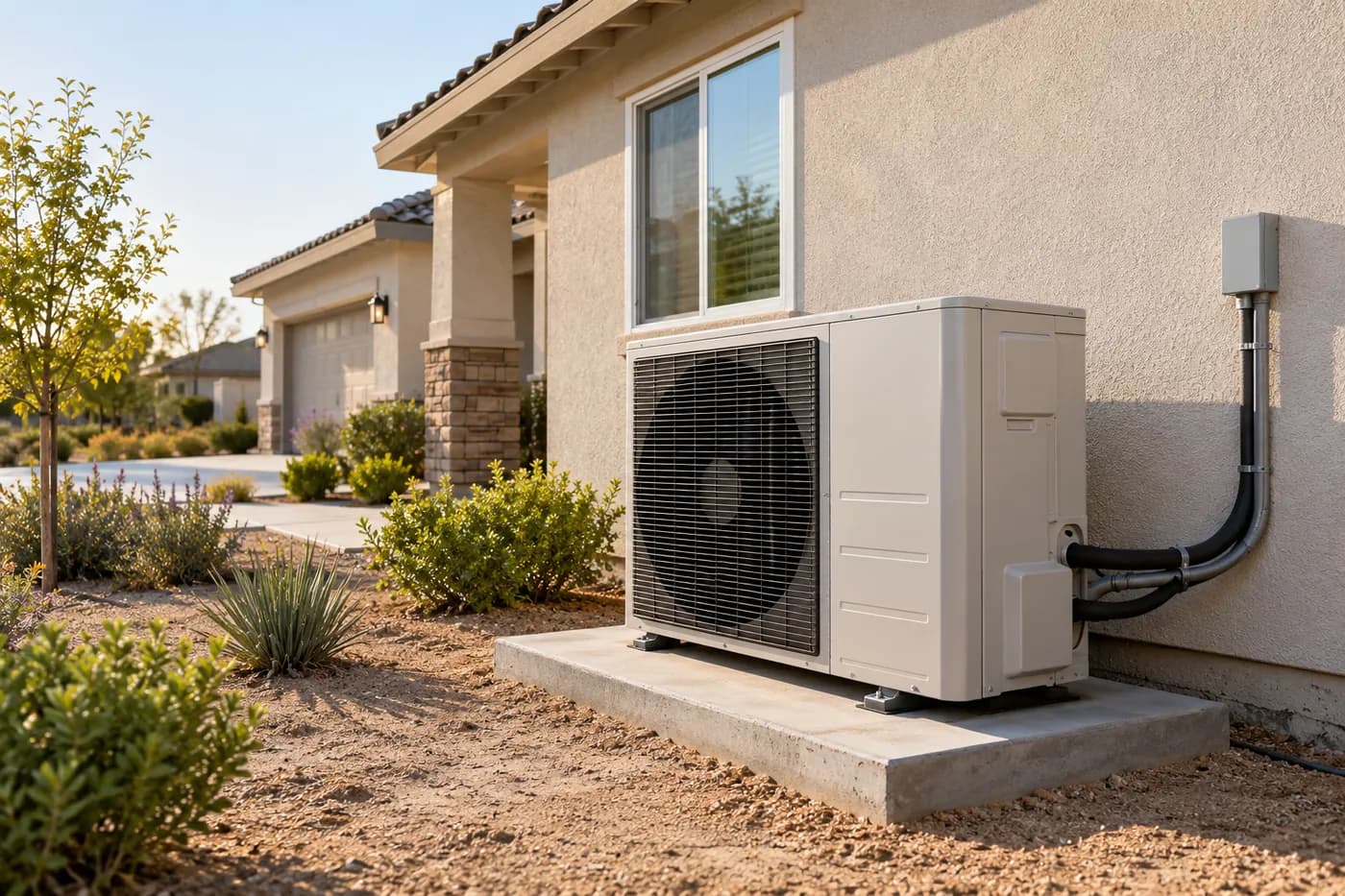
A heat pump uses an outdoor compressor, condenser coil, fan, reversing valve, indoor coil, blower motor, and refrigerant line. The same basic equipment handles both seasons. The thermostat tells the system when to cool, heat, or use another heat source if one is installed.
Heating still works when outdoor air feels cool because the system extracts available heat. As outdoor conditions change, the system may run longer or use more power. Good insulation, sealed ducts, and clear airflow help the equipment deliver steady heat.
A heat pump does not burn natural gas for normal heating. That can simplify the heating equipment, but it makes the electrical service and circuit important. A technician should check the panel, breaker space, wiring, disconnect, and equipment location before the system is selected.
Is a heat pump a good fit for Fresno weather?
Fresno's long, hot summers suit a heat pump's cooling mode, and its generally moderate winter conditions can suit heat pump heating. The system still needs correct sizing and airflow. Insulation, duct condition, thermostat settings, and electrical capacity affect how well it performs through both seasons.
During summer, a heat pump operates much like a standard central AC. The compressor and condenser coil remove heat from indoor air, while the evaporator coil and blower move cooled air through the ducts. A dirty coil, blocked filter, or weak airflow can reduce cooling from either system type.
Winter performance depends on the home's heat loss and the system's capacity. A load calculation helps determine whether the heat pump can cover the heating demand. On colder mornings, the system may run for longer periods, so the duct system and thermostat must be set up for stable operation.
Fresno dust can collect on filters and outdoor coils. Keep the filter changed on the schedule that fits the home, and keep leaves, grass, and stored items away from the outdoor unit. Turn off power before any cleaning beyond simple exterior debris removal, and never open electrical panels.
What electrical and ductwork changes might a heat pump need?
A heat pump may need a dedicated circuit, suitable breaker, outdoor disconnect, compatible wiring, and enough service capacity. It also needs ducts that can carry the required airflow. The estimate should address the panel, line set, drain, thermostat, return air, and any damaged or undersized duct sections.
The electrical inspection should cover the service panel, breaker space, circuit size, conductors, disconnect, and grounding. Some systems also use supplemental electric heat, which can affect the circuit requirements. Do not change breakers, wiring, or panel components yourself.
Existing central ducts may work well if they are sized correctly, sealed, insulated, and supported. Leaks, crushed flex duct, weak returns, and closed grilles can make a new heat pump seem underpowered. Ask for airflow testing or a clear explanation of any duct changes included.
The refrigerant line must match the equipment and remain properly insulated. The condensate drain also needs a safe route and correct slope. A compatible thermostat may be needed because heat pump controls differ from a basic cooling-only thermostat.
When does a gas furnace and AC still make sense?
A gas furnace and AC may fit a home with an existing gas service, suitable furnace cabinet, familiar ductwork, and a preference for separate heating and cooling equipment. It can also make sense when the electrical service is limited. The final choice should follow a load calculation and equipment inspection.
A furnace uses a heat exchanger, burners, flame sensor, igniter, blower motor, and venting system. The AC uses a separate outdoor condenser and indoor evaporator coil. This arrangement can simplify replacement when the existing cabinet, ducts, electrical circuit, and gas setup are in usable condition.
Furnace safety depends on proper combustion, venting, controls, and heat exchanger condition. If you smell gas or suspect a gas leak, leave the building and call PG&E or 911 from outside first. Never test, adjust, or repair gas equipment yourself.
A furnace may be a practical choice for a home that already has a suitable gas connection and wants a familiar heating setup. Still, compare the full installation scope, including venting, drain work, electrical connections, filter access, and the matched AC coil.
How should you choose between the two systems?
Start with the home's heating and cooling load, then compare electrical capacity, gas availability, duct condition, equipment location, operating habits, and future service needs. Programs and rebates can change, so ask about current rebates before buying. ProLine Services can explain the installation scope before scheduling.
Ask for an estimate that lists the equipment type, capacity, efficiency rating, indoor coil, thermostat, electrical work, refrigerant line, duct repairs, drain work, and removal of old equipment. A clear scope makes it easier to compare systems that are not built the same way.
Think about how the home is used. A heat pump combines heating and cooling in one system, while a furnace and AC divide those jobs. Neither choice fixes poor insulation, blocked returns, or leaking ducts, so those conditions should be identified before the equipment is selected.
The work should follow a clear process: consultation, estimate, scheduling, installation or repair, and final walkthrough. At the walkthrough, confirm heating and cooling modes, thermostat operation, filter access, airflow, outdoor clearance, and the location of the electrical disconnect.
Which heating and cooling option fits your home?
| Option | Strengths | Watch-outs |
|---|---|---|
| Heat pump system | Provides heating and cooling with one outdoor system and no gas combustion for normal heating. | Needs suitable electrical service, correct controls, and good airflow. |
| Gas furnace and AC | Uses familiar separate heating and cooling equipment and may fit existing gas service. | Needs safe combustion, venting, gas controls, and two main pieces of equipment. |
| Ductless mini-split | Can serve rooms without extending central ducts and allows separate zone control. | Needs indoor head placement, outdoor access, condensate planning, and line set routing. |
| Heat pump with supplemental heat | Can use electric backup heat during colder conditions or higher heating demand. | Backup heat can affect electrical requirements and operating cost. |
| Existing system replacement | May reduce changes when the current ducts, pad, line set, and electrical setup are compatible. | Old components still need inspection instead of automatic reuse. |
Questions people ask
Will a heat pump cool a Fresno home as well as an AC?
A properly sized heat pump can provide central cooling much like an air conditioner. It still depends on a matched system, clean coils, correct refrigerant charge, sealed ducts, and strong airflow. Hot weather can expose weak insulation or duct leaks, so those conditions should be checked during the installation estimate.
Does a heat pump always need electric backup heat?
Not always. The need depends on the home's heat loss, local conditions, system capacity, and the design selected. Some homes use a heat pump alone, while others use supplemental electric heat or another backup source. The load calculation should explain the expected heating capacity and any backup requirement.
Can existing furnace ducts be used with a heat pump?
Often, existing central ducts can be used if they are correctly sized, sealed, insulated, and supported. A heat pump may expose airflow problems that were already present. Ask the installer to inspect returns, supply runs, filter access, grilles, and damaged flex duct before deciding that the ducts are ready.
Should I wait to buy until I know about rebates?
Programs and rebates can change, and eligibility may depend on equipment, installation details, location, or timing. Ask about current rebates before buying and confirm the requirements from the program source. Do not choose equipment based only on a possible rebate. The system still needs to fit the home's load.