
What should I check on the thermostat first?
Set the thermostat to Cool, lower the setting a few degrees, and confirm the fan is set as you expect. Replace weak batteries if the display is blank or fading. If the thermostat is blank after fresh batteries, the issue may involve a tripped breaker, low voltage, or a condensate safety switch.
Stand near the thermostat and confirm the mode says Cool, not Off, Heat, or Fan Only. Set the target below the room temperature and check whether the indoor fan starts. If the display is blank, replace the batteries with the correct type.
Some thermostats go blank when a condensate safety switch shuts the system down. That can happen when the drain backs up or the drain pan fills. Do not pour chemicals into the drain or remove wiring to bypass the switch.
If the thermostat shows a call for cooling but nothing happens, note the display, the indoor fan response, and the time the problem started. That information helps a technician check low voltage, controls, and power in the right order.
Should I check the breaker and air filter?
Look at the AC breaker without removing the panel cover. If it is fully off, reset it once by moving it off, then on. Check the filter for heavy dust and replace it with the correct size if needed. A breaker that trips again signals a fault, so leave it off and call for service.
Find the electrical panel and look for the breaker labeled AC, condenser, or air conditioner. A breaker in the middle position may be tripped. Reset it once by moving it fully off, then on, and stop if it trips again.
Check the return filter without opening the furnace cabinet. A filter packed with dust can cut airflow, freeze the evaporator coil, and strain the blower motor. Use the size printed on the old filter, and keep the grille clear.
Do not remove the panel cover, pull wires, or open the outdoor disconnect. A repeated trip can point to a short, locked compressor, bad capacitor, or damaged wiring. Leave the breaker off and call for service if it will not hold.
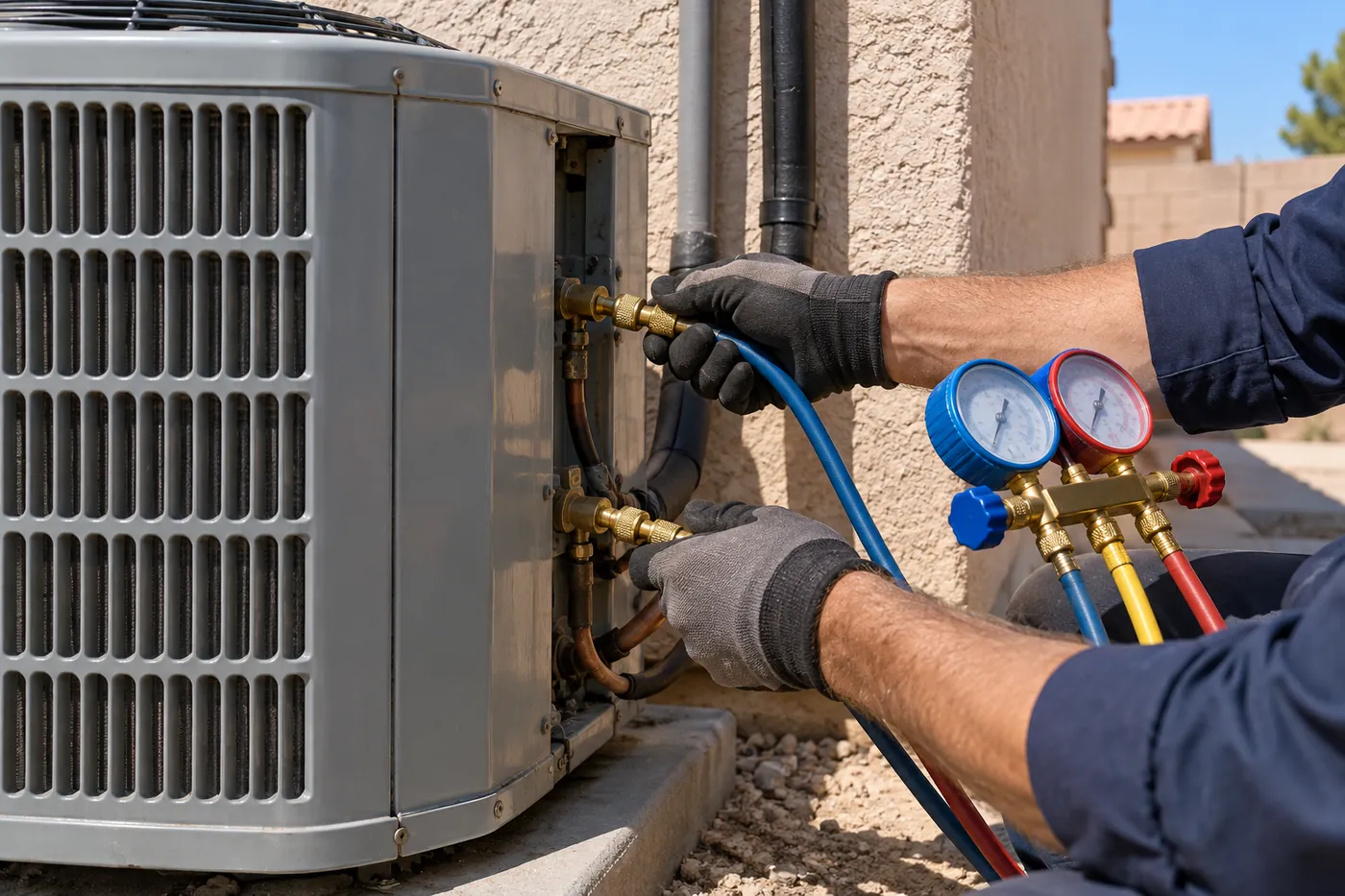
What if the outdoor unit is silent or the lines are iced?
An outdoor unit that is silent may have lost power, a failed contactor, a control problem, or a tripped safety switch. Ice on the copper lines or coil often points to low airflow or a refrigerant problem. Turn the thermostat off, let ice melt, and never chip it away or handle refrigerant.
Listen from a safe distance. A quiet outdoor unit may have no power, while a steady hum with no fan movement can point to a capacitor or compressor problem. Do not push the fan blade or lift the service cover.
Ice on the copper line, indoor coil, or cabinet often means low airflow or a refrigerant issue. Turn the thermostat to Off and set the fan to On only if air is moving freely. Let the ice melt on its own.
Water under the indoor unit can follow a frozen coil or clogged condensate drain. Keep clear of electrical equipment, place a container where it will not create a trip hazard, and call if water reaches wiring or the panel.
How can I stay cool while waiting for AC help?
Close blinds on sunny windows, use fans only when they help, and move to the coolest safe room. Drink water and avoid adding heat with ovens or dryers. Check vulnerable family members, pets, and anyone with health risks. If indoor heat becomes dangerous, leave for a cooler place and call for help.
Block direct sun with blinds or curtains and close doors to rooms that are not in use. Run ceiling fans only when people are in the room, because fans cool skin rather than the air. Avoid ovens, dryers, and other heat sources.
Drink water and check on children, older adults, pets, and anyone with a health condition. Move them to a cooler location if the indoor temperature keeps rising. Never leave a child, pet, or vulnerable person in a hot parked vehicle.
Use a thermometer if you have one, and write down indoor temperature, thermostat setting, and the time the AC stopped. If heat becomes unsafe, go to a cooler place and call from there.
When should I call the 24/7 emergency line?
Call when the breaker trips again, the unit smells burnt, water is near electrical equipment, the compressor only hums, or the system will not restart after safe checks. Leave the building and call PG&E or 911 from outside first if you smell gas. The emergency line is open 24/7.
Call for help when safe checks do not restore cooling, or when the system makes a loud electrical sound, smells burnt, leaks water, or trips the breaker again. A compressor that hums without starting can damage itself if the system keeps trying.
Gas changes the response. If you smell gas or suspect a gas leak, leave the building and call PG&E or 911 from outside first. Do not flip switches, use a phone indoors, or investigate the furnace.
Before you call, record the thermostat display, breaker behavior, filter condition, ice, water, sounds, and room temperature. We can start with a consultation, then provide a free estimate before work starts when repair or replacement is needed.
What does each AC symptom usually mean?
| Symptom | What it can mean | Safe first step |
|---|---|---|
| Thermostat is blank | Dead batteries, tripped breaker, low voltage, or a safety switch | Replace batteries and check the AC breaker |
| Breaker is off | Power fault, locked compressor, capacitor problem, or wiring issue | Reset it once, then stop if it trips again |
| Breaker trips repeatedly | A continuing electrical or compressor fault | Leave it off and call for service |
| Indoor fan runs, outdoor unit is silent | Outdoor power, contactor, control, or compressor problem | Check the thermostat and listen from a safe distance |
| Copper line or coil has ice | Low airflow, dirty filter, or refrigerant problem | Turn cooling off and let the ice melt |
| Water appears near the indoor unit | Frozen coil, clogged drain, or full drain pan | Keep away from wiring and call if water spreads |
Questions people ask
Why is my thermostat blank even after I replace the batteries?
The system may have a tripped breaker, a condensate safety switch, a low-voltage problem, or a loose connection. Check the AC breaker once without opening the panel. If the display stays blank, do not bypass wiring or remove the thermostat. Record what you see and call for service.
Why does my AC freeze when the filter looks clean?
A clean filter does not rule out a blocked evaporator coil, weak blower motor, closed duct damper, low airflow, or refrigerant problem. Turn the thermostat off and let the ice melt. Do not chip the ice or add refrigerant. A technician needs to test airflow and the sealed system.
Should I reset an AC breaker more than once?
No. Reset a tripped AC breaker one time by moving it fully off and then on. If it trips again, leave it off. Repeated resets can worsen a short, locked compressor, bad capacitor, or damaged wiring. Do not remove the panel cover or open the outdoor disconnect.
Can I run the AC if the outdoor unit is silent?
Turn cooling off if the outdoor unit stays silent while the indoor fan runs. The system may have lost outdoor power, or the contactor, capacitor, control, or compressor may have failed. Continuing to call for cooling can strain the equipment. Record the sound and thermostat response before calling.