
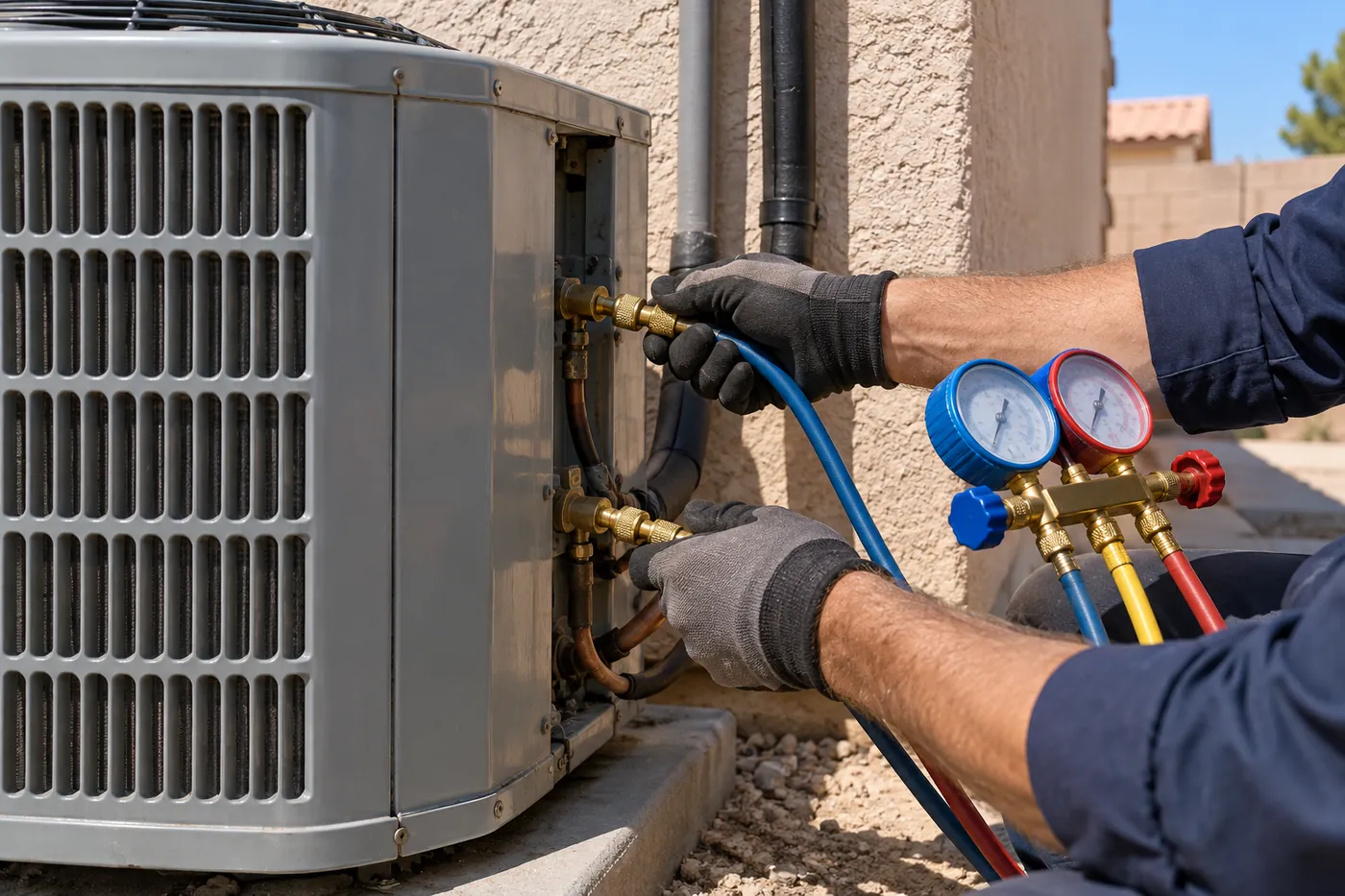
Why can one HVAC repair cost more than another?
Two repairs can look similar from the thermostat but require different work. A simple electrical part may be quick to reach, while a compressor, refrigerant leak, or control problem may take more testing and labor. The final cost follows the actual fault, the parts involved, and the time needed to complete the repair safely.
An HVAC repair starts with the symptom, not a guess. A system that hums but does not start may have a weak capacitor, failed contactor, or control issue. A unit that runs without cooling may have an airflow problem, a dirty condenser coil, low refrigerant from a leak, or a compressor fault.
Part cost is only one piece. A capacitor is usually reached at the outdoor unit, but a blower motor may require work inside the furnace cabinet. A compressor repair also involves checking the electrical load, refrigerant circuit, and cause of failure so the new part is not damaged.
Write down what you noticed before calling. Note the thermostat setting, sounds, odors, breaker position, water around the indoor unit, and whether the fan runs. Do not open panels or handle refrigerant. Those notes help the technician start with useful clues.
How does the failed part change the repair cost?
The failed part matters because parts have different functions, locations, and testing steps. A capacitor or contactor may point to an outdoor-unit electrical repair. A fan motor, control board, compressor, or refrigerant leak can require more labor and system testing. The right diagnosis prevents replacing a part that did not cause the symptom.
Capacitors help motors start and run. When one weakens, the outdoor fan may buzz, start slowly, or stop while the compressor tries to run. A contactor controls power to the outdoor unit, so pitted contacts or a stuck contactor can leave the system silent or create unsafe electrical behavior.
A fan motor moves air through the indoor or outdoor unit. Its failure can cause weak airflow, overheating, or a unit that shuts down. A control board connects sensors, relays, and commands, so diagnosis may include checking low-voltage signals and the parts connected to the board.
A compressor is central to the cooling cycle and may be costly to replace because the work includes electrical testing, refrigerant recovery, brazing, evacuation, and charging. A refrigerant leak also requires locating the leak instead of simply adding refrigerant. Ask for the failed part and the test that confirmed it.
How do diagnosis and access affect repair cost?
Diagnosis is the time spent measuring, testing, and tracing the fault. Access also matters. A unit in a clear garage is easier to reach than equipment in a tight attic or on a roof. Difficult access can add labor, setup, and safety steps even when the failed part is familiar.
Diagnosis should separate a bad part from a symptom caused by another problem. A frozen evaporator coil, for example, can come from poor airflow, a dirty filter, or low refrigerant. Replacing a sensor without checking airflow or the refrigerant line can leave the real problem in place.
Access changes the work area. Attic equipment can require careful movement around insulation, low clearance, and hot surfaces. Roof-mounted equipment adds ladder, roof-surface, and weather considerations. A technician also needs room to remove panels, test wiring, and carry the correct replacement part.
Before the visit, clear items near an indoor unit if it is safe to do so. Keep the thermostat accessible and note where the electrical disconnect and gas shutoff are located, but do not operate unfamiliar equipment. Photos of the model label and the thermostat display can help with planning.
Does refrigerant, age, or timing change the repair cost?
Refrigerant type can affect service steps and parts availability, while a system's age can limit repair choices. After-hours work may involve different scheduling conditions than a planned visit. Ask what failed, why it failed, and whether the repair fits the system's remaining useful life before approving work.
Refrigerant is not interchangeable by guesswork. The type listed on the equipment label affects gauges, recovery, charging, and the replacement options used for the repair. If a leak is present, the technician may need to inspect the evaporator coil, condenser coil, fittings, and refrigerant line.
Age changes the repair question because older systems may have worn motors, brittle wiring, restricted coils, or hard-to-find parts. A single repair can still be sensible, but repeated failures may point to a larger replacement decision. Ask how the repair affects the rest of the system.
Timing matters when a system fails during a hot night or outside normal scheduling hours. Waiting can be unsafe for someone vulnerable to heat, while a noncritical noise may allow a planned visit. If you call outside regular hours, describe the symptom, any odor, and whether the system is running.
When should you repair or replace an HVAC system?
Repair often makes sense when the system is otherwise sound and the fault is isolated. Replacement deserves a closer look when failures keep returning, major parts are failing, or the system no longer meets the home's needs. ProLine Services explains the findings and provides a free estimate before work starts.
Repair is easier to justify when the heat pump or air conditioner has steady airflow, clean cabinets, sound wiring, and one clear failed part. A repair may be a poor fit when the compressor, coil, and controls are showing separate problems. Ask for the condition of the main components, not only the part that failed.
Replacement also involves more than the equipment itself. The right size, duct condition, electrical service, refrigerant line, drain, and installation access all affect the result. If you are comparing choices, write down the model information, past repairs, comfort problems, and rooms that stay too hot or too cold.
ProLine Services works with residential and commercial HVAC systems and follows a set process: Consultation, Estimate, Scheduling, Installation or repair, then Final walkthrough. We explain what the testing found, what the work involves, and what to expect before the job begins. Ask for a free estimate before any work starts.
What should you ask about common HVAC repairs?
| Repair type | What drives the cost | What to ask |
|---|---|---|
| Capacitor or contactor | Part location, electrical testing, and access to the outdoor unit | What test showed the part failed? |
| Fan motor | Motor size, cabinet access, wiring, and airflow checks | Is the motor failure causing another problem? |
| Compressor | Electrical readings, refrigerant work, failure cause, and system age | Is repair sensible for this system? |
| Refrigerant leak | Leak location, refrigerant type, coil access, and line access | Will the leak be found and repaired? |
| Control board | Board compatibility, low-voltage testing, and related sensors | What caused the board to fail? |
| Attic or roof access | Clearance, setup, roof or attic conditions, and labor time | What access steps are included? |
Questions people ask
How can I prepare for an HVAC repair estimate?
Record the thermostat setting, room temperature if known, unusual sounds, odors, breaker activity, and any water near the indoor unit. Take a photo of the equipment label and thermostat display if you can do so safely. Do not remove panels, touch wiring, or handle refrigerant before the visit.
Can low refrigerant cause more than weak cooling?
Yes. Low refrigerant can reduce cooling, freeze the evaporator coil, increase run time, and strain the compressor. The charge should not be guessed or topped off without checking for a leak. Ask whether the technician inspected the coil, fittings, and refrigerant line and identified the source.
Does attic access always make an HVAC repair harder?
Not always, but tight attic access can add setup and labor because the technician may work around insulation, low clearance, hot surfaces, and limited space. The equipment also needs room for panels and tools. Share photos of the access path and equipment area when scheduling if possible.
How do I know if repair is better than replacement?
Look at the system's overall condition, not just one failed part. Repeated failures, a failing compressor, damaged coils, poor airflow, and obsolete components can make replacement worth reviewing. A single isolated electrical fault may favor repair. Ask what other major parts were tested and what they showed.