Which signs mean I should call right away?
Urgent signs include gas smell, active sparking, a burning electrical odor, burst plumbing, sewage backing into living space, and loss of heat or cooling in dangerous weather. Shut down only what you can reach safely, leave gas hazards immediately, and call the right trade or emergency services from a safe location.
Use danger, damage, and weather as your first screen. A small drain drip with a bucket under it may wait, but water near an electrical panel cannot. A warm house may be uncomfortable, but no cooling during extreme heat can become urgent for older adults, infants, or people with health problems.
Call now for smoke, active sparking, repeated breaker trips, a pipe that is spraying water, or sewage entering the home. Stop using the affected fixture or circuit if you can do so without touching water or exposed wiring. Do not remove electrical covers or attempt a gas or electrical repair.
Before calling, note the location, what changed, whether water or smoke is spreading, and which breaker or fixture is involved. Take a photo only if you can do it without entering a smoky, wet, hot, or unsafe area. Clear people and pets away from the danger zone.
What should I do if I smell gas or burning?
Gas smell is an immediate evacuation issue. Leave the building, avoid switches, flames, phones, and vehicles inside, then call PG&E or 911 from outside first. A burning smell or sparking may indicate an electrical or equipment fault. Move away from smoke and call 911 when there is fire or immediate danger.
Gas odor can come from a gas line, appliance connection, or pilot problem. Do not search for the leak, turn a valve, relight a pilot, or test an appliance. Everyone should leave, including pets, and no one should go back inside until the proper authority says it is safe.
Burning plastic, hot insulation, or scorched wiring can signal an overloaded circuit, loose connection, failing motor, or damaged component. Smoke, crackling, a warm outlet, or a breaker that trips again raises the urgency. Keep clear and call 911 if there is smoke, fire, or immediate danger.
If the odor stops and there is no smoke, leave the affected equipment off and schedule electrical or HVAC service. Do not reset a breaker repeatedly. Write down the outlet, light, appliance, or equipment involved so the technician can trace the circuit safely.
When is an AC or heating failure urgent?
Loss of cooling becomes urgent during extreme heat when a child, older adult, or person with a health condition is at risk. No heat on a cold night also needs prompt help. A noisy fan or uneven temperature may wait if the system still runs and no burning odor or water damage is present.
An air conditioner that blows warm air may have a failed capacitor, contactor, condenser fan motor, compressor, clogged filter, or frozen evaporator coil. Check the thermostat setting and filter without opening equipment panels. If the outdoor unit hums, sparks, smells hot, or repeatedly trips the breaker, turn away from the equipment and call for help.
No heat can come from a thermostat problem, failed igniter, flame sensor, blower motor, or control board. A furnace that starts and stops may also need testing around the heat exchanger and safety controls. Do not bypass a switch, relight equipment after a gas odor, or work inside the furnace cabinet.
Valley heat can make a cooling failure more serious, especially for people who cannot regulate body temperature well. Move vulnerable people to a safe, cooler location if needed. Keep water away from electrical equipment and tell the technician if the system stopped suddenly, ran constantly, or made a new sound.
Which plumbing problems cannot wait?
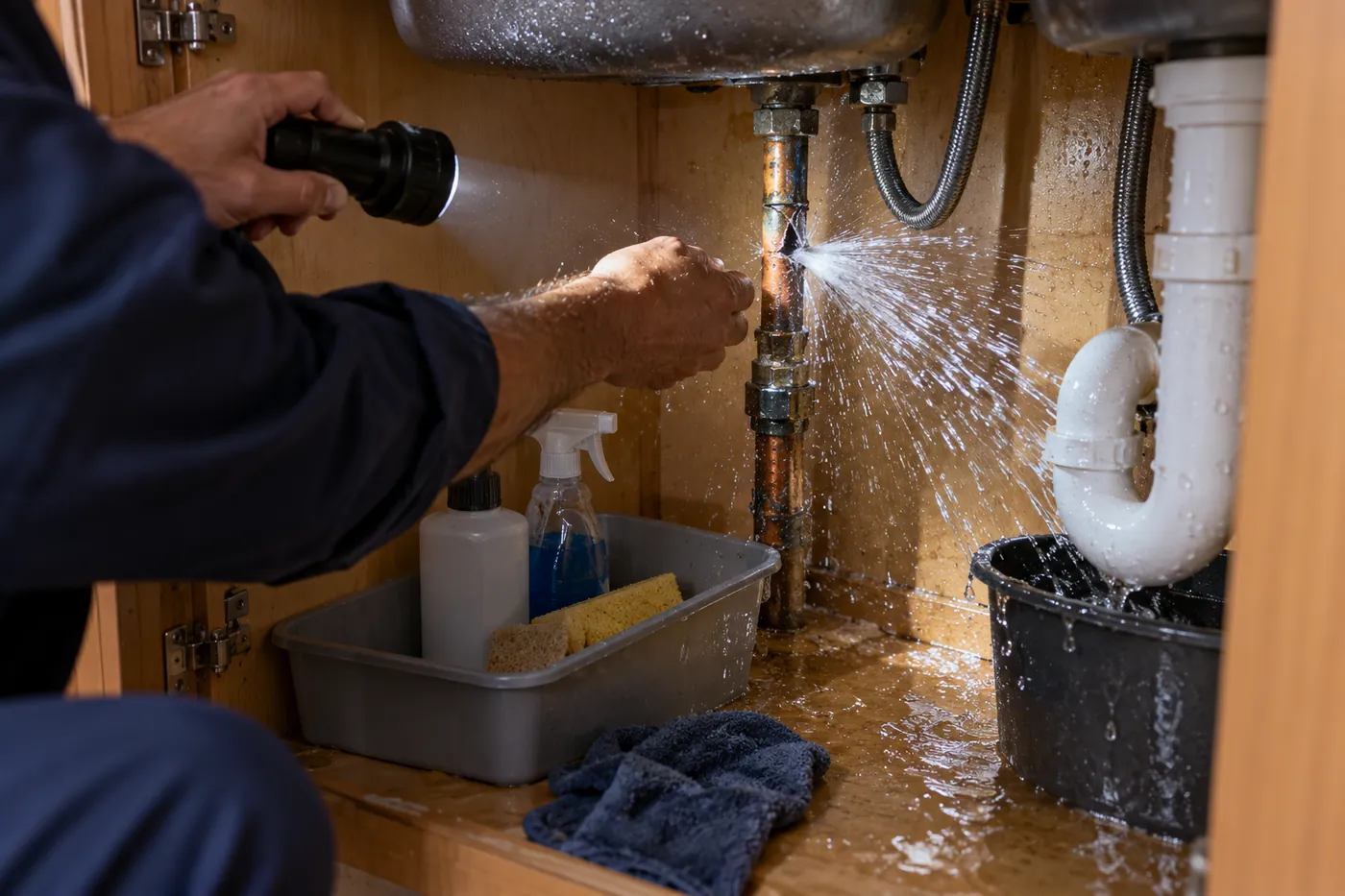
Call now for a burst pipe, uncontrolled leak, sewage backup, or water near electrical equipment. A slow drain, loose faucet, or running toilet can often wait if you can contain it and no damage is spreading. Know where the main shutoff is, but do not enter standing water near electricity.
A burst pipe can damage walls, flooring, cabinets, and wiring quickly. If the main water shutoff is easy to reach and the area is dry, closing it may slow the damage. Do not cross standing water, climb through a wet area, or touch electrical equipment to reach a valve.
Sewage backup is urgent because contaminated water can spread through floors, drains, and personal items. Stop using nearby sinks, toilets, showers, and appliances that drain into the affected line. Keep children and pets away, avoid contact, and ventilate only if you can do so without entering an unsafe area.
Hard water can shorten the life of valves, fixtures, and water heaters, but scale on a faucet usually does not require an emergency call. A leaking water heater, damaged expansion tank, failed shutoff valve, or pipe that is actively spraying water needs faster attention. Note where the water starts and how fast it spreads.
What can wait for a scheduled repair?
A scheduled visit is usually reasonable for weak airflow, a slow drain, a dripping faucet, one dead light, or a water heater that is still working without a dangerous leak. Keep using only safe fixtures and watch for changes. If the symptom grows, spreads, smells hot, sparks, or threatens health, move it into the call-now group.
Small problems can still point to larger faults, so keep notes while you wait. Record when the symptom happens, which rooms or fixtures are affected, and whether it changes after rain, heavy use, or a breaker reset. Stop using the equipment if the sound, odor, heat, or leak gets worse.
A slow drain may involve a P-trap, buildup, vent, or deeper line restriction. Avoid harsh chemical drain cleaners, especially if a technician may need to open the line. For a light or outlet problem, use another safe circuit and do not keep resetting a breaker that trips again.
ProLine Services serves residential and commercial customers across Fresno and nearby communities. Our process is Consultation, Estimate, Scheduling, Installation or repair, then Final walkthrough. We can help sort the symptom by trade, and our emergency line is open 24/7 when the situation cannot safely wait.
Which problems need a call now?
| Sign | Trade | Call now or schedule |
|---|---|---|
| Gas smell | Plumbing or emergency services | Leave the building and call PG&E or 911 from outside |
| Burning odor or sparks | Electrical or HVAC | Call now and keep clear of the equipment |
| No cooling in extreme heat | Heating and Cooling | Call now if a vulnerable person may be at risk |
| No heat on a cold night | Heating and Cooling | Call now if indoor conditions are unsafe |
| Burst pipe | Plumbing | Call now and shut the main water only if safe |
| Sewage backup | Plumbing | Call now and avoid contact with contaminated water |
Questions people ask
Is a gas smell ever safe to check myself?
No. Do not search for the source, test appliances, relight a pilot, operate switches, or turn a valve. Leave the building immediately and call PG&E or 911 from outside first. Keep people and pets away until the proper authority says it is safe to return.
Can I wait on an AC problem during hot weather?
It depends on indoor conditions and who is in the building. No cooling during extreme heat is urgent for older adults, infants, and people with health conditions. Move vulnerable people to a cooler safe place, avoid opening equipment panels, and call promptly if the system is not recovering.
What should I do if sewage backs up?
Stop using fixtures that drain into the affected line, including toilets, sinks, showers, and some appliances. Keep children and pets away from the water, avoid direct contact, and do not use chemical drain cleaners. Call promptly because contaminated water can damage materials and create health risks.
Should I reset a breaker that keeps tripping?
No. A repeated trip can point to an overloaded circuit, short, damaged appliance, or loose connection. Unplug equipment only if you can do so without touching water, heat, smoke, or exposed wiring. Leave the breaker alone and call an electrician if it trips again or there is odor or sparking.