Which charger level fits my driving?
Level 1 charging works from a standard outlet and may suit short daily trips. Level 2 charging uses a dedicated 240 volt circuit and adds range faster. Your best choice depends on how far you drive, how long the vehicle sits parked, the vehicle's charging limit, and the electrical capacity available.
Level 1 uses a standard 120 volt outlet. It may work for a plug in hybrid or a driver who parks overnight and adds only a modest daily distance. Check that the outlet is grounded and not shared with a space heater, freezer, or other heavy load.
Level 2 charging needs a dedicated circuit sized for the charger. It can refill a battery faster, but the actual charging speed also depends on the vehicle and the charger's output. A larger charger does not help if the vehicle cannot accept that power.
Start by writing down your usual daily mileage and parking hours. If the car sits in the garage all night, Level 1 may be enough. If you return with a low battery or need faster charging before work, Level 2 is usually the more practical setup.
Can my electrical panel handle a charger?
A panel can support a charger only when its service rating and existing loads leave room for the added demand. An electrician checks the main breaker, service drop, panel condition, wire size, and large loads such as air conditioning. The result may be a direct connection, load management, subpanel, or upgrade.
A home charger adds a large continuous electrical load. The panel check should include the main breaker, available spaces, wire condition, and the loads already served by the home. Air conditioning, electric water heating, cooking equipment, and pool equipment can all affect the calculation.
Older Fresno homes may have smaller panels, crowded breaker spaces, or aging wiring. A panel can look full without being overloaded, while an open breaker space does not automatically mean the service has enough capacity. The service drop and main equipment matter too.
The electrician may recommend a dedicated breaker, a subpanel, load management, or a panel upgrade. Do not remove breakers, change wiring, or install a larger breaker yourself. Those changes can create shock and fire hazards when the equipment is not sized together.
Should a charger go in the garage or outdoors?
Garage mounting often keeps the charger protected and places it near the panel. Outdoor mounting can work when the equipment is listed for outdoor use and the circuit is protected from weather and impact. Cable reach, drainage, wall strength, and vehicle parking all matter.
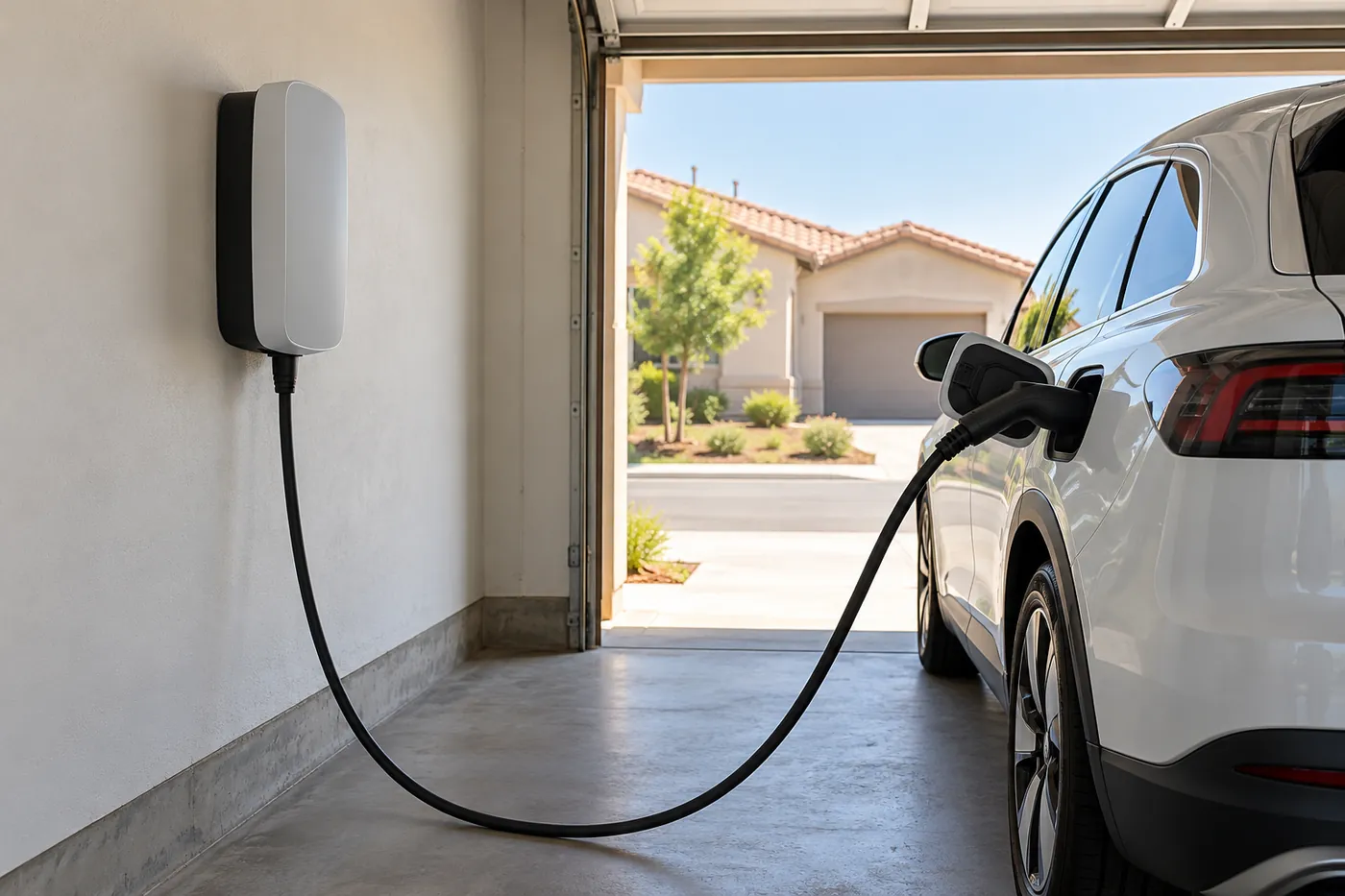
A garage location may offer a shorter cable path and protection from sun, dust, and vehicle contact. The wall still needs to support the equipment, and the cable should reach the charge port without crossing a walking path. Keep the unit clear of stored items that could pull on the cable.
Outdoor installation requires equipment approved for outdoor use. The mounting surface, conduit, fittings, and connections must handle rain, heat, dust, and accidental impact. Fresno summers can put extra heat on equipment mounted in direct sun, so location and shade deserve attention.
Think about how you park before choosing the wall. A charger on the wrong side can force the cable across the vehicle or driveway. Mark the parking spot, measure the distance to the panel, and note doors, gates, sprinklers, and areas where people walk.
What should I know about circuit permits?
A new 240 volt branch circuit usually needs a permit and inspection under local electrical rules. Charger selection also matters because some units plug into a receptacle while others are hardwired. A qualified installer checks the equipment instructions, circuit design, disconnect needs, and final connections.
Permits and inspections help confirm that the circuit, wiring, protection, and mounting meet applicable rules. The exact requirements can depend on the equipment and the local jurisdiction. Ask what work is included in the installation plan and what must be ready before inspection.
Some chargers use a cord and plug, while others connect directly to the circuit. A plug in unit needs a properly rated receptacle and a secure location. A hardwired unit needs the correct conduit, conductors, breaker, and connection method shown in the equipment instructions.
Keep the charger manual and vehicle information available. The installer may need the maximum input rating, connector type, and mounting instructions. Do not improvise an adapter or use an extension cord for a permanent charging setup.
How should I prepare for installation?
Good preparation starts with your driving pattern, vehicle charging limits, panel photos, parking location, and preferred cable path. Write down any breaker trips or heat at the panel. We can review those details, provide a free estimate before work starts, and follow the process from consultation through final walkthrough.
Before calling, record the vehicle year and model, the charge port location, and how many miles you normally drive each day. Take clear photos of the electrical panel and the proposed parking area. Do not remove the panel cover or open electrical equipment.
Note any flickering lights, warm breakers, burning smells, or breakers that trip when large appliances run. These signs may point to an existing electrical problem that should be addressed before adding a charger. Keep the charger packaging or product link available if you already selected one.
ProLine Services is licensed in California under C-10 for electrical work. We serve Fresno and nearby cities, and we can help plan the circuit, mounting location, and charger connection for your home.
Which installation questions should I answer first?
| Question | Why it matters | What to check |
|---|---|---|
| How far do I drive each day? | Daily mileage helps show if Level 1 charging is enough. | Write down your usual weekday and weekend driving. |
| Can the panel support the load? | Existing electrical demand affects circuit size and upgrade needs. | Note the main breaker, panel age, and large electric appliances. |
| Where will the car park? | The parking position controls cable reach and mounting location. | Mark the spot and measure the path to the panel. |
| Will the charger be indoors or outdoors? | Outdoor equipment needs suitable weather protection and mounting. | Check sun, rain, dust, drainage, and possible impact. |
| Will the unit plug in or be hardwired? | Each method needs different equipment and circuit details. | Review the charger instructions and input rating. |
| What permits are needed? | A permit and inspection may apply to new circuit work. | Ask about local requirements before scheduling the work. |
Questions people ask
Do I need Level 2 if I drive short distances?
Not always. Level 1 may cover short daily trips when the vehicle parks for many hours. Level 2 makes more sense when you need faster charging, drive farther, or return home with little battery left. Compare your daily miles, parking time, and vehicle charging limit before choosing the equipment.
Can an older Fresno home get a 240 volt charger?
Many older homes can support one, but the electrical system must be checked first. The review should cover service size, panel condition, breaker space, wiring, and existing loads. An electrician may recommend a dedicated circuit, subpanel, load management, or panel upgrade before the charger is connected.
Can I mount an EV charger outside?
Yes, when the charger is listed for outdoor use and installed with suitable wiring, conduit, fittings, and mounting. Choose a spot protected from vehicle impact and standing water. Consider direct sun, dust, cable reach, and drainage. Outdoor placement should also keep the cable out of walking paths.
What should I have ready before an electrical visit?
Have the vehicle model, charger information, panel photos, parking location, and preferred cable route ready. Write down daily mileage and any breaker trips or warm electrical equipment. Do not open the panel or change wiring. These details help the installer evaluate the circuit and mounting plan.