
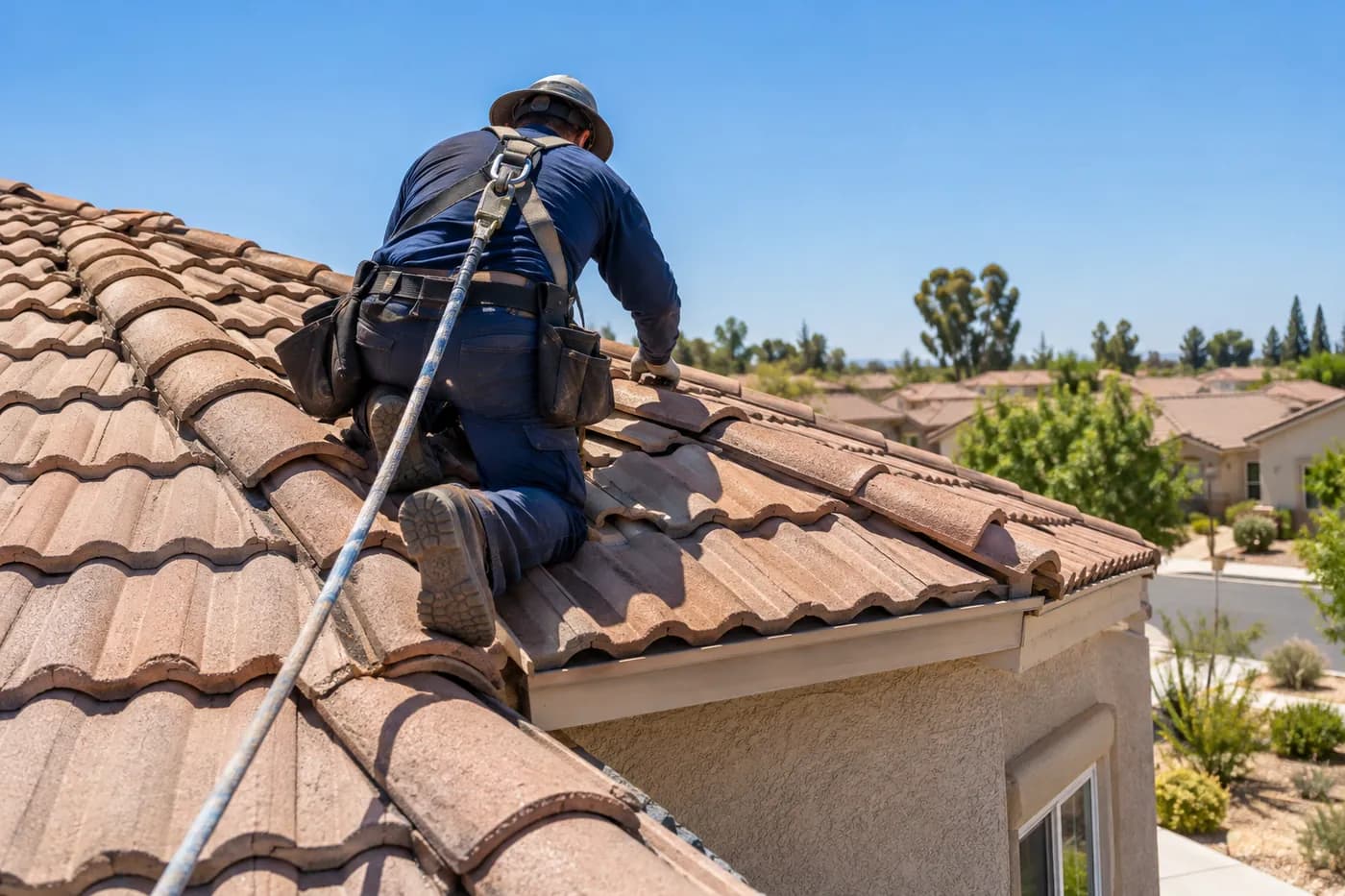
How does Central Valley heat wear on a roof?
Strong sun and repeated heat cycles can dry roofing materials, weaken sealants, and speed wear around edges, vents, and flashing. Shingles may lose granules, while tile can crack or shift. Regular ground checks help you spot changes before water reaches insulation, drywall, or framing.
A roof expands during hot afternoons and contracts as temperatures fall. Over time, that movement can stress flashing, pipe boots, ridge caps, and sealant joints. Dark streaks are not always a leak, but soft spots and missing material deserve closer review.
Shingles with curled edges, exposed fiberglass, bald patches, or loose tabs may shed water poorly. Tile roofs can develop cracked pieces or slipped tiles after heat and foot traffic. Do not walk on a roof to inspect it, since one misplaced step can damage materials or cause a fall.
Look from the ground with binoculars after a clear day. Check roof edges, valleys, vents, and areas above bathrooms or kitchens. Inside, watch for ceiling stains, peeling paint, musty odors, or damp insulation, especially after a hot period followed by rain.
What can I safely check from the ground?
From the ground, look for missing or broken shingles and tile, sagging roof lines, damaged gutters, loose flashing, and debris in valleys. Use binoculars instead of climbing. Inside the home, check ceilings and attic areas for stains or damp insulation, but avoid stepping between attic joists.
Start at the corners and follow the roofline with your eyes. A straight edge should not look wavy or dipped. Sagging may point to damaged decking, framing, or long-term moisture, and it needs an inspection rather than a surface patch.
Check gutters and downspouts for granules, tile pieces, or heavy sediment. Granules can collect as shingles age, while broken tile fragments may signal impact or movement. Make sure downspouts direct water away from the foundation and do not discharge against exterior walls.
Look for rusted metal, lifted flashing, open seams, and gaps around vent pipes. After a storm, inspect the yard for roofing pieces. Do not climb a wet roof, use a ladder near power lines, or pull loose material from a high area.
How do debris, gutters, flashing, and vents cause trouble?
Leaves, dust, and branches can block drainage and hold moisture against roofing materials. Clogged gutters can send water behind fascia or toward walls. Damaged flashing and vent seals create entry points around roof openings, where a small leak can spread through insulation and ceiling materials.
Debris in valleys or behind roof vents can slow water flow. Pooled water may reach seams that normally stay dry. Valley areas deserve extra attention because they collect runoff from more than one roof plane.
Flashing protects transitions around chimneys, walls, skylights, and vents. Bent metal, cracked sealant, or exposed fasteners can let water enter. A roof vent may also have a damaged boot or loose cap, even when the surrounding shingles look sound.
Clean gutters when they are safely reachable and keep downspouts open. If the roof is steep, high, wet, or close to electrical lines, hire a professional. Never cover a suspected leak with random sealant without finding the water path.
When should I schedule a roof inspection?
Schedule an inspection after strong wind, hail, falling branches, or heavy rain, and whenever you see interior stains or missing roofing. An inspection also helps before buying or selling a home, planning repairs, or addressing an older roof with recurring leaks or loose materials.
Storm damage is not always visible from the driveway. Wind can lift shingle edges, crack tile, loosen flashing, or damage underlayment without leaving a large hole. Water may enter later when the next rain reaches the weakened area.
Inside the home, mark the location and date of each stain. Check whether it grows after rain or appears near a vent, valley, or exterior wall. Do not assume a dry ceiling means the problem is gone, because trapped moisture can remain in insulation and wood.
An inspection should review the roof surface, flashing, penetrations, drainage, and visible attic conditions. Ask for photos or clear notes about the findings. That record helps you separate urgent repairs from maintenance that can be scheduled later.
What roof maintenance can a contractor handle?
A roofing contractor can inspect hard-to-reach areas, identify storm damage, repair failed flashing or roofing materials, clear drainage problems, and explain replacement options when repairs no longer make sense. ProLine Services offers roof repair, replacement, and inspections, with a free estimate before work starts.
The right repair depends on the material and the source of the leak. A small flashing failure may need different work than damaged underlayment, broken tile, or widespread shingle loss. Patching the visible stain alone may leave the water path untouched.
For larger work, ask what areas will be protected, how existing materials will be removed, and how flashing and vents will be treated. Good roof work also includes checking the deck and drainage instead of focusing only on the outer surface.
Our process follows Consultation, Estimate, Scheduling, Installation or repair, Final walkthrough. ProLine Services serves Fresno and nearby Central Valley cities. Call (559) 201-0101 to arrange a roof inspection or review damage after a storm.
Which roof conditions need attention first?
| Sign | Why it matters | What you should do |
|---|---|---|
| Missing or curled shingles | Water can reach underlayment and roof decking. | Arrange an inspection before the next heavy rain. |
| Cracked or shifted tile | Open areas can expose underlayment to sun and water. | Avoid walking on the roof and document the location. |
| Clogged or sagging gutter | Water may spill behind fascia or against walls. | Clear only safe, reachable areas or call for help. |
| Loose flashing or vent seal | Roof openings can allow hidden leaks into insulation. | Have the flashing and surrounding materials checked. |
| Ceiling stain after a storm | Moisture may still be moving through the roof system. | Mark the stain, inspect from inside, and schedule service. |
Questions people ask
How often should I look at my roof in Fresno?
Check visible roof areas from the ground a few times each year and after strong wind, hail, falling branches, or heavy rain. Pay extra attention before and after the hottest months because heat can worsen cracked sealants, loose flashing, and brittle roofing materials. Schedule a professional inspection when you see damage or recurring stains.
Can I pressure wash roof shingles or tile?
Pressure washing can strip granules from shingles, break tile, force water under laps, and damage flashing or sealants. It may also spread debris into gutters and valleys. Use only cleaning methods approved for the roof material, and ask a roofing professional before applying chemicals or using equipment on the roof surface.
Why do I find granules in my gutters?
A small amount of granule loss can occur as shingles age, but a sudden increase may follow hail, wind, foot traffic, or surface wear. Check for bald patches, exposed matting, and loose shingle edges from the ground. If the amount keeps growing or appears after a storm, schedule an inspection.
Should I repair a leak before replacing the roof?
The answer depends on the size, location, and condition of the roof. A localized flashing or shingle failure may be repairable, while widespread aging, repeated leaks, or damaged decking may point toward replacement. An inspection can identify the water path and separate a focused repair from a larger roof problem.